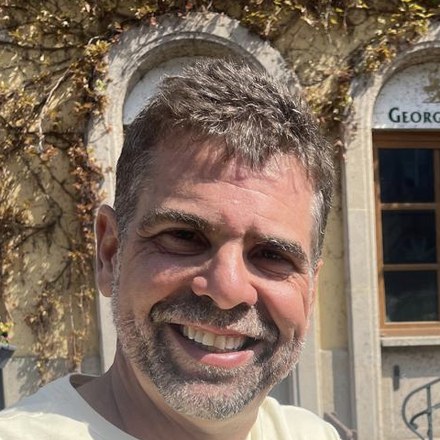
Urban policy analyst and modeller · Ipea, Brasília
I build agent-based and complex-systems models that let policy analysts ask what if — about housing markets, taxes and transfers, commuting, labour, carbon emissions and violence against women. I have worked on complex systems applied to urban and regional analysis since 2014.
Selected recent work
Carbon taxes and subsidies in Brazil
Do carbon taxes push firms to innovate or simply to contract? A firm-level simulation of emissions under alternative policy mixes.
Cities and institutions
How institutional rules and urban dynamics co-evolve — a chapter for the Handbook on Institutions and Complexity.
Simulations against intimate partner violence
Using the VIDA model to inform policy on violence against women in Brazil, with Lígia Mori Madeira and Ludmila Ribeiro.
Coupled housing and labour markets
Urban transition when housing and jobs pull on each other: neighbourhoods, workers and firms adjusting together, with Jiaqi Ge.
PolicySpace2
A spatial agent-based model of Brazilian metropolitan regions: real estate, credit, taxes and endogenous public policy.
PolicySpace3
An open platform for ex ante simulation of public policy in Brazilian urban areas: families, firms, local governments and a bank across five markets.
Current projects
Phasing out oil in urban contexts
A three-city comparison of how urban economies absorb the end of oil. With Jiaqi Ge, Yuri Kasahara and Kristian Tvedt.
Continuous development of policy modelling at Ipea
The PolicySpace line itself: an endogenous, empirical and spatial approach to comparing policies, which the carbon-tax and emissions work comes out of. Coordinator, with Olândia Ferreira Lopes and Gustavo L. Rocha Lima.
SobreVIDA
Agent-based modelling of the mechanisms of intimate partner violence. Since 2024, coordinated by Lígia Mori Madeira (UFRGS), funded by CNPq.
Environmental macro-criminality
Institutional capacity in security and justice policy against illegal mining, deforestation and wildlife trafficking. Since 2025, coordinated by Lígia Mori Madeira (UFRGS), funded by CAPES.
Path dependence
I trained as an architect and urbanist, writing on slums and urban mobility in Belo Horizonte in the 1990s. A quantitative master’s in Geography followed, with an emphasis on municipalities and spatial analysis. From 2005 I took a doctorate in Regional Economics at CEDEPLAR, spent 2008 at RIKS in Maastricht, and defended a co-tutored thesis at Utrecht University in 2009 on social heterogeneity and urban real estate prices.
I joined Ipea in 2009 as a planning and research analyst and received tenure in 2012. Along the way I coordinated urban studies (2011–13), was deputy director of the Directorate for Regional and Urban Studies (2013–15), coordinated the Department of Sectoral Studies, DISET (2015–19), headed a division (2019–21) and served as Coordinator for Financing and Investment in 2023. Since 2015 I have also taught in Ipea’s master’s programme in Public Policy and Development. In 2018 I held a post-doctoral position at the University of Oxford, funded by UNDP Brazil. CNPq has awarded me a research productivity grant three times, in 2014, 2017 and 2020.
Elsewhere
Curriculum Vitae · Lattes CV · GitHub · ResearchGate · LinkedIn · Twitter
Email: bernardo.furtado at ipea.gov.br